If you are a true friend of mine, you understand the glory that is the Teen Eighties Movie genre. Anyone who was a preteen, teenager, or young adult during this glorious decade understands what goes into making a perfect 80s Film. It’s hard to define, but you know it when you see it, and you guiltily relish in the pleasure of seeing these campy masterpieces.
Mostly everyone knows the true classics of the decade:
Ferris Bueller’s Day Off, Goonies, The Breakfast Club, and
Fast Times at Ridgmont High to name a few, but there are some obscure ones out there worth mentioning. These movies hold a soft spot in the hearts of a few, but if brought up in a conversation, most “regular” people have never heard of them. I’m here to attempt to change that. Prepare to jot these down and take the list to your nearest video rental place—whether it be online or in store—because if you’re a lover of the 80s, you should see these movies.
For those who are short on time (or attention span), I'm splitting the list into three parts. Please feel free to put in your two cents and let me know about your lesser-known favorites from the decade of neon colors and choreographed prom dance routines.
Just One of the Guys (1985)
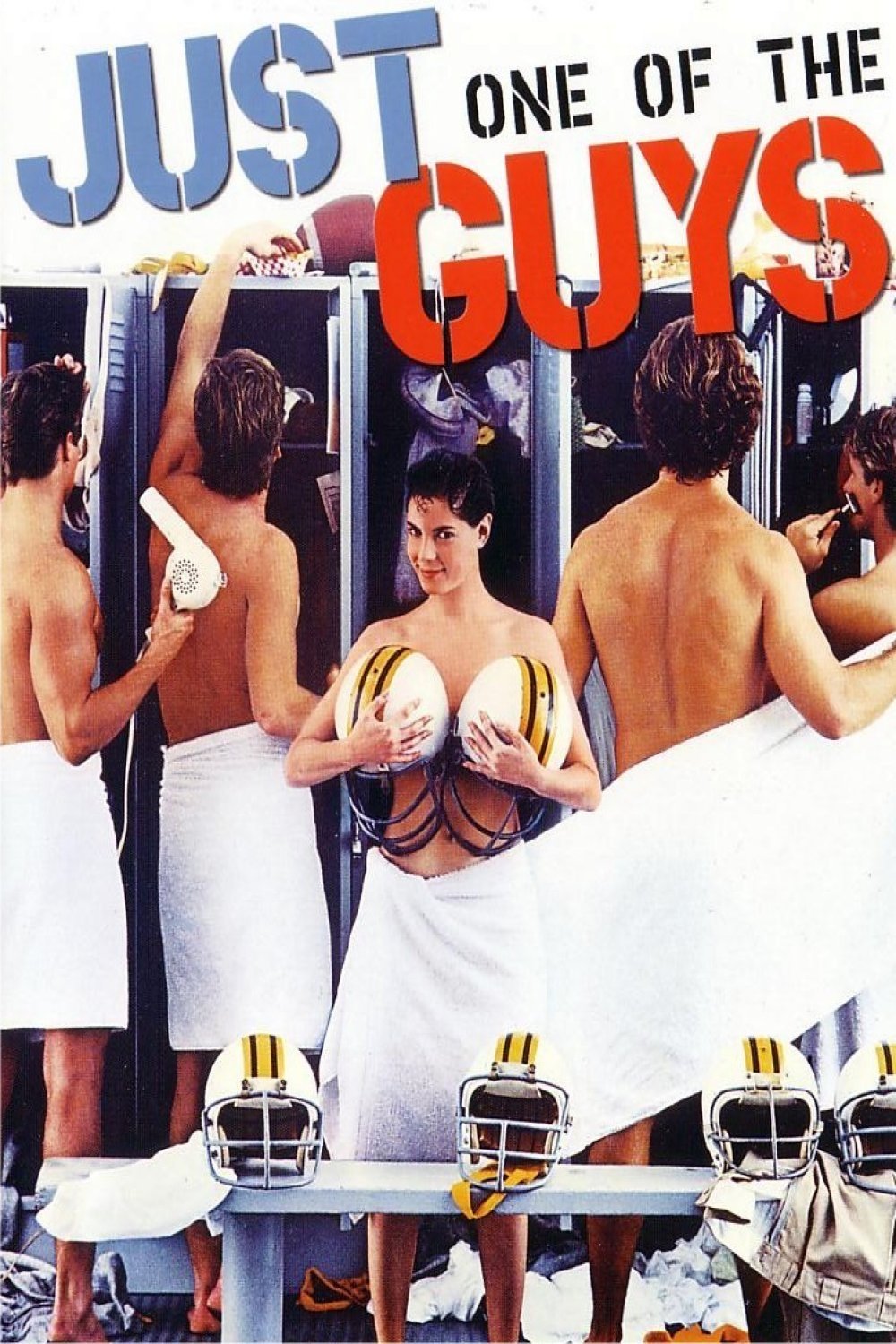
One of the many role reversal movies of the decade,
Just One of the Guys stars Joyce Hyser as Terry Griffiths, a beautiful girl who’s convinced her good looks keep her from being taken seriously as a journalist. When one of her articles doesn’t make it into a journalism contest, she decides to switch schools and go undercover as a boy so she can re-enter her article there. She only intends to stay a boy for a couple of weeks, but of course, craziness ensues, and Terry must play, um, Terry for the remainder of the school year.
Unlike Hilary Swank, who was quite convincing as a boy, not even in a heartbeat, would I ever believe Hyser as a guy. But of course, everyone at the new school is completely convinced that this girlie-man Terry is the real deal, including the over-sexed girl who develops a crush and the guy who becomes the best bud. Yes, yes, we all know how the movie will end, but it’s still great fun just watching all the high jinx that get us there.
Girls Just Want to Have Fun (1985)
Helen Hunt, Sarah Jessica Parker, and more dancing than anyone should be asked to handle. This movie is a teen girl’s dream.
Parker plays Janey, the new girl in town who wants nothing more than to be a dancer. When the hit show “Dance TV” holds auditions for two new dancers, Janey wants it more than anyone in the world. With the help of her wild child friend Lynne (Hunt), Janey goes behind her military father’s back and tries out for the show. She’s paired with hot, athletic, motorcycle-riding Jeff (Lee Montgomery). Instant attraction isn't so instant, but soon Jeff and Janey grow a little closer every night Janey sneaks out to practice what is sure to be the hottest routine anyone has
ever seen.
 Girls
Girls has everything from Catholic schoolgirl jokes to bad boys from the wrong side of the tracks to punk freaks who crash parties, and even the quintessential redeeming moment between father and daughter happens right on cue. This movie is tons of fun and is chocked full of cheesy slow motion dance moves. Hunt’s Lynne, Jonathan Silverman’s Drew, and a young Shannen Doherty as Jeff’s younger sister have some great, albeit corny, on screen chemistry--always a bonus!
SpaceCamp (1986)
On January 28, 1986, the Challenger explosion devastated my world. When I was seven years old, I wanted to be a part of NASA more than anything else, and seeing those astronauts lose their lives that day was really hard for me. Not until 1988, two years after its release, did I see a movie that fueled my NASA dreams all over again.
SpaceCamp is a fantastical family adventure starring Kate Capshaw as

Andie and Tom Skerrit as her husband Zach. Zach and Andie are both astronauts, but definitely not of equal standing. While Zach gets the pleasure of going into space, Andie is stuck on Earth teaching at NASA’s space camp. The campers she encounters her first summer on the job include a smart and rowdy bunch: Kevin (Tate Donovan), the resident horn ball; Tish (Kelly Preston), an idiot savant of sorts; Kathryn (Lea Thompson), the headstrong one who longs to be a pilot; scientist-in-training Rudy (Larry B. Scott); and the very young, head-in-the-clouds Max (Joaquin Phoenix back when he was Leaf). While testing the booster rockets aboard a real shuttle, the team is blasted into space accidentally. Andie may have wanted to go up in space, but definitely not with a bunch of kids.
Scary things happen up there miles above the Earth, but unlike that horrific moment in January of 1986, this movie has a child-pleasing happy ending. See it for the dreams it evokes, or just see it for the future stars of the 90s.
The Boy Who Could Fly (1986)
The Boy Who Could Fly deals with heavier subjects than most other 80s teen movies-- suicide, autism, and alcoholism, but even when I was at an age where few of these things made sense to me, I still adored this movie. It was like
E.T. without the scary little alien.

Jay Underwood plays Eric Gibb, an autistic boy who lives with his alcoholic uncle Hugo (played by the legendary Fred Gwynne). Eric soon forms a very close bond to Milly (Lucy Deakins), the new girl next door who's recently lost her father to suicide. Milly knows Eric is a special person but doesn't realize how much so until after a couple of unexplainable events bring her think Eric might actually be able to fly.
Even though this sounds like sci-fi, this film is firmly planted in reality. It depends heavily on the dreams of young people who want to escape their lives. I found myself wanting to believe this boy could really fly. But, because I was a harshly realistic child at times, I also kept waiting for the moment my dreams, along with his, would be dashed. With many somber scenes, some involving mean-spirited high-schoolers and others involving rather archaic institutional practices, the film comes dangerously close to some serious dream dashing. Even with all that seriousness, the conclusion, though eerily evocative of
E.T., brings warmth to my heart and a tear to my eye every time.
 Adam Sandler plays Charlie Fineman, a 9/11 widower whose family was aboard one of the planes. In another life, far separated from the one he leads now, he was a successful dentist, a happy man, and a good friend. Now he's simply a mess. The always wonderful Don Cheadle plays Alan Johnson, Charlie's former college roommate. While Charlie has lost everything, Alan seems to have everything--the successful dental practice, a beautiful family, and wonderful home. When Alan happens upon Charlie one night on the street, a wonderful relationship begins to blossom. Both Charlie and Alan need each other more than they know. Charlie needs a person to escape with him, someone who didn't know him when he was a family man. Alan needs someone with whom he can be wild and irresponsible just to escape the overwhelming responsibilities of his life.

